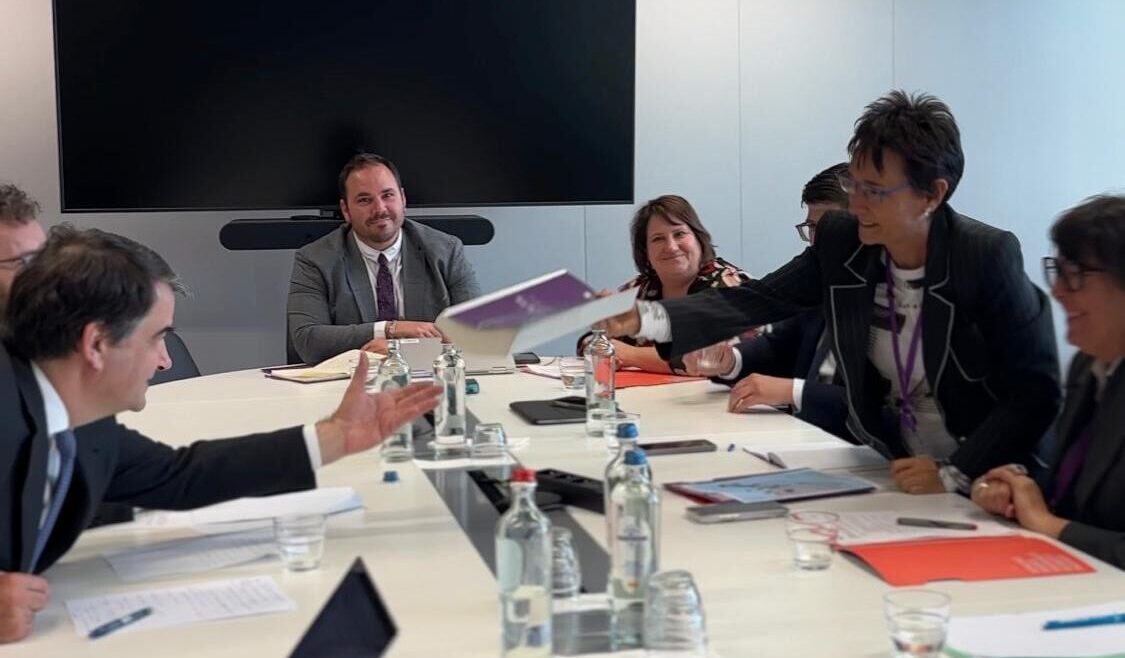
On 21 April, an international delegation of the European Free Alliance met with Raffaele Fitto, Executive Vice-President of the European Commission responsible for Cohesion and Reforms. During the meeting, EFA President Lorena López de Lacalle handed Mr. Fitto a letter signed by more than 650 local councillors and regional parliamentarians from over 25 European regions. The delegation includes MEPs and regional and local elected representatives from around Europe.
In the letter, the elected representatives of the European local political world express their concern about the Commission’s intention to centralize EU funds in the first draft of the next European budget 2028-2034, or Multiannual Financial Framework (MFF). Such an outcome would have devastating implications for EU nations and regions, especially those more affected by their state’s bias.
They ask the Commission to:
- Withdraw the proposal to recentralise EU programmes into a single National Plan per Member State, which would de facto concentrate decision-making power in national capitals and weaken regional and local autonomy in the allocation of EU funds.
- Respect and safeguard the essential role of local and regional authorities in the design, management, and implementation of the EU budgetary framework, particularly within Cohesion Policy.
- Guarantee robust democratic oversight by the European Parliament and ensure full transparency in the methodology used for the allocation of EU funds.
EFA President Lorena López de Lacalle said: “The European Free Alliance and our member parties are working to put the regions’ voices at the centre and make them heard to the European Union. As our party is really strong at the regional and local level, we represent the platform of parties in the EU that works closer to the people. It is important that the European Commission listens to the real concerns of European citizens”.
“We have collected more than 650 signatures from around 30 different nations and regions of the EU. This proves that this issue affects communities everywhere in the EU, especially those that need it the most, that are far from the states capitals and that will be negatively affected by centralization”, she added.
Regional parliaments reject re-centralization
Regional parliaments around Europe have also raised their concerns against the Commission’s aim to renationalise regional funding. Since the first draft of the MFF was published, the Parliaments of Catalonia, the Basque Country, Corsica, Brittany, and Frisland have all approved a resolution, led by EFA, rejecting the re-centralisation of the EU funding. The resolution demands that the European Commission withdraws the MFF proposal and the adopts of a future EU budget which “includes, respects and strengthens the role of regional and local authorities, especially in the framework of the Cohesion policy”.
Time for the debate in the European Parliament
Meanwhile, the Budget Committee of the European Parliament adopted the MFF Interim Report, which will be debated and voted next week during the Strasbourg plenary. It represents the first official position of the European Parliament since the Commission’s presented its first draft last July.
After many months of work, EFA celebrates that the MFF interim report that will be voted is going in the right direction. It supports a slightly better budget, opposes the centralisation of the EU funds, reassures the role of the local and regional authorities, and allocates clear and fixed financial envelopes for the different policies.
EFA Secretary General Oriol Cases said: “The MFF interim report represents a clear political success for EFA, which has consistently voiced strong opposition to the European Commission’s initial proposal. Thanks to sustained pressure through a coordinated campaign involving our local, regional and European members, we have seen a positive shift, with our key priorities reflected in the Parliament’s position. We can rightfully claim a share of this achievement”.
“However, we remain vigilant. This report reflects only the European Parliament’s position and marks the beginning of negotiations that could last up to two years. That is why we met today with Commissioner Fitto and the European Parliament’s main MFF rapporteurs to ensure our priorities continue to be heard and considered throughout the process”, he added.