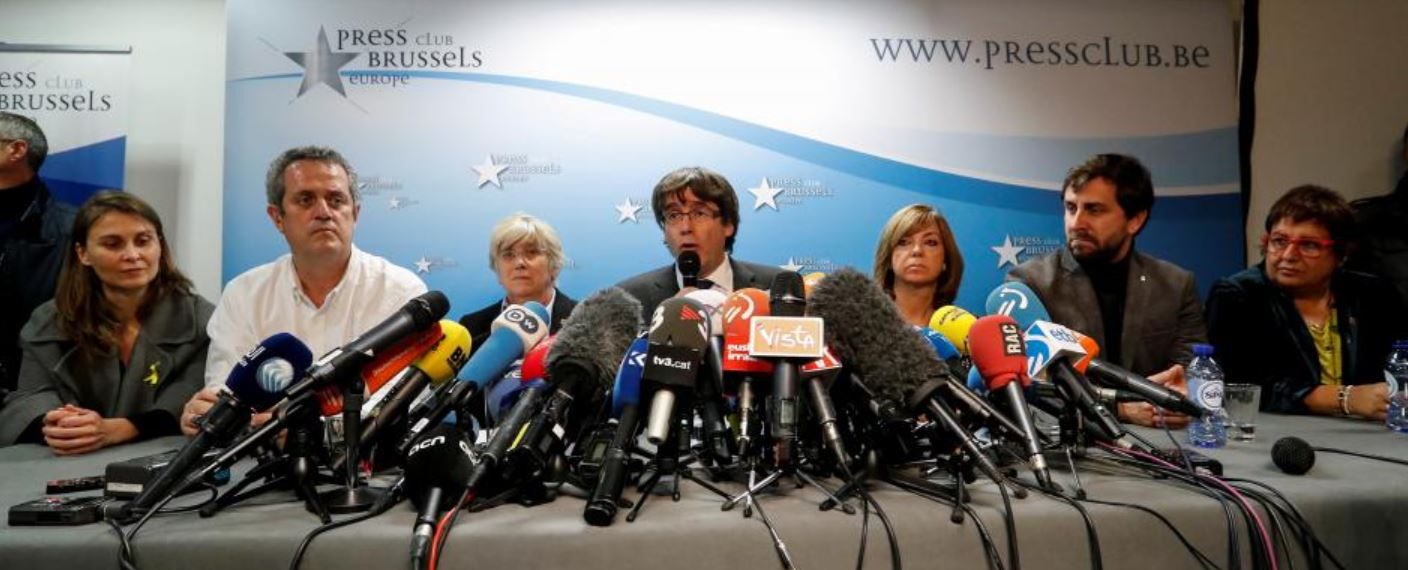
Nearly ten years after the 1 October 2017 referendum, a major step towards ending the judicialisation of the Catalan independence process has been taken. The application of the Amnesty Law to embezzlement offences paves the way for the return of exiled Catalan leaders and marks a new stage in overcoming the legal consequences of the conflict.
Today, the Spanish Constitutional Court has ruled that the Amnesty Law must also apply to embezzlement offences linked to the independence process. The ruling has paved the way for the Spanish Supreme Court to lift the national arrest warrants against exiled Catalan leaders, opening the door to their return. After years of legal proceedings and exile, the decision marks a significant step towards restoring their rights and closing a painful chapter of the Catalan political conflict. The ruling comes after the European Union’s highest court confirmed in July that the Spanish amnesty law is compatible with EU law.
“Today we are much closer to restoring political rights, much closer to freedom”, celebrated EFA Secretary General Oriol Cases. “Today’s ruling is very forceful and very clear, leaving no room for interpretation: the Supreme Court must apply the amnesty to all the leaders convicted and prosecuted for the events of October 2017”, he added.
“The abusive use of judicial proceedings can never replace a people’s democratic and peaceful desire to decide their own future. EFA welcomes the opening of a path for Catalan political leaders to regain their full rights, including the right to participate in Spain’s upcoming general election on 29 November”, said EFA President Lorena López de Lacalle. “Congratulations to all our colleagues who never lost hope — even while in prison — of achieving an independent Catalonia”, she added.
A step towards leaving repression and exile behind
For years, the aftermath of the 2017 referendum resulted in criminal proceedings, convictions, political disqualifications, imprisonment and exile affecting politicians, public officials and citizens involved in the independence movement. The implementation of the amnesty represents an opportunity to bring an end to this chapter and to restore rights affected by the judicial consequences of the conflict.
From a European perspective, this is also about the relationship between democratic political expression and the use of criminal law in political conflicts. The right to participate in political life, to express political ideas and to advocate peacefully for a different constitutional or territorial future is an essential part of the democratic debate. Voting, expressing an idea and peacefully defending a political project should never be treated as criminal acts simply because of the political position they represent.
Amnesty is not the end of the political conflict
The implementation of the amnesty should not, however, be understood as the resolution of the underlying political conflict. Nearly ten years after the referendum, a significant part of Catalan society continues to defend the right of Catalonia to decide its political future. The amnesty addresses the legal consequences of the independence process; it does not settle the political question at its core.
This distinction is essential. The end of judicial proceedings can help create the conditions for a new political stage, but it cannot replace political dialogue or democratic solutions. The Catalan question therefore remains a political issue. The demand for democratic self-determination has not disappeared with the passage of time, nor has it been resolved by the courts.
A European question
The Catalan experience also raises broader questions for Europe about how democratic states respond to political movements seeking greater self-government, independence or changes to existing territorial arrangements. Across Europe, territorial and national questions are addressed through different constitutional and political frameworks. What they have in common is the need for democratic dialogue and respect for fundamental rights.
The European Free Alliance has consistently advocated for the right of peoples and communities to determine their political future through democratic and peaceful means. The amnesty can therefore be seen as an important step towards overcoming the judicial dimension of the Catalan conflict. But it cannot be its political conclusion.
The events of 1 October 2017 remain a defining moment in recent Catalan history. The political question remains. For Europe, the lesson is clear: political conflicts ultimately require political and democratic solutions. And in Catalonia, the demand for the right to decide its future remains unresolved.