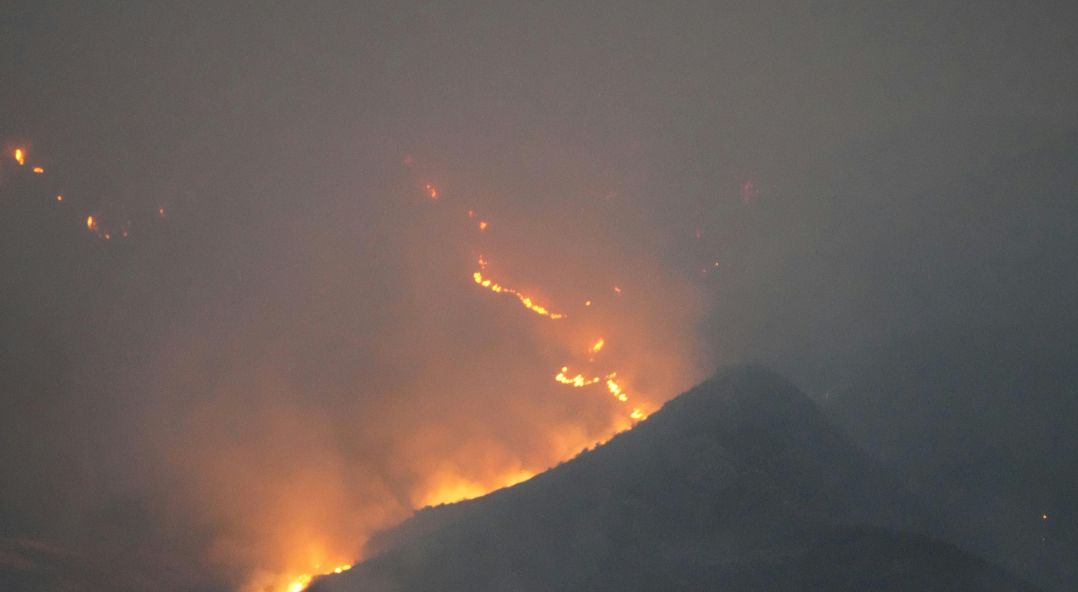
Wildfires across Southern Europe are no longer exceptional events: they are becoming a structural feature of our climate reality. This summer, fires affected regions across Europe, including areas that had rarely experienced such events before. Increasingly frequent and severe fires are exposing not only environmental vulnerabilities, but also deep-rooted territorial, economic and governance imbalances. As Ana Miranda MEP highlighted: “From Belgium to Southern Europe, from the North to the East, Europe burned where it had never burned before.”
While climate change is an undeniable driver, bringing prolonged droughts, higher temperatures and increasingly erratic precipitation patterns, it does not fully explain the scale and intensity of the current crisis. A comprehensive analysis must also consider the long-term effects of rural depopulation, land abandonment, insufficient prevention strategies and highly centralised decision-making structures.
Prevention must come first
Over recent decades, large parts of rural Europe have experienced sustained population decline. This process has resulted in the progressive abandonment of agricultural and forestry management practices that historically contributed to landscape resilience. The absence of active land stewardship has led to increased fuel loads, ecosystem degradation and heightened fire risk.
Yet in many territories, there is still no adequate long-term wildfire prevention strategy. Prevention is often underfunded, while the resources available for firefighting are insufficient, both in terms of equipment and human capacity. As a result, citizens can be left to protect their own homes, families, livestock and only material assets, putting themselves in danger because public systems are not adequately prepared to protect them.
This cannot be accepted as the new normal
Prevention must be the first step of any European wildfire strategy. It means managing forests and agricultural land, maintaining rural populations, reducing fuel loads, restoring landscapes and ensuring that local authorities and communities have the resources and capacity to act before a fire starts.
This trend has been exacerbated by centralised governance models that limit the capacity of regions to design and implement context-specific land management strategies. In parallel, European funding instruments, including the Multiannual Financial Framework (MFF), have not consistently reached rural communities or supported localised, small-scale interventions. Instead, funding allocation mechanisms have too often favoured large-scale projects with limited territorial integration. The increasing centralisation of the allocation of European funds risks making this situation even worse by moving decisions further away from the territories that understand their needs best. Often overlooked by the Common Agricultural Policy (CAP), which still tends to favour scale over local farmers, rural communities play a critical role in wildfire prevention and ecosystem management. Their knowledge, presence and continuous interaction with the land are essential components of any effective resilience strategy. Policies that fail to recognise and support these actors risk undermining both environmental sustainability and social cohesion.
Economic interests contribute to the problem
At the same time, increasing pressure from economic interests is contributing to the transformation of natural landscapes. The replacement of native, fire-resilient species with monocultures driven by market demand reduces biodiversity and increases vulnerability to fire. Forestry policies must move away from models that prioritise short-term productivity over resilient, diverse and multifunctional landscapes. In addition, the expansion of large-scale renewable energy infrastructure, particularly solar and wind installations, has, in some cases, led to deforestation, soil disruption and alterations to local water systems.
Although regulatory frameworks exist to limit the scale of such developments, legal loopholes allow projects to be artificially fragmented into smaller units, thereby circumventing environmental and planning constraints. The cumulative impact of these practices is significant: landscape fragmentation, loss of ecological continuity, and further exposure to extreme climate events.
The energy transition is both necessary and urgent. However, its implementation must adhere to principles of territorial justice, environmental integrity and democratic participation. Renewable energy deployment cannot be pursued at the expense of rural communities or without regard for local ecosystems. The day after: recovery and restoration
Wildfire policy cannot end when the flames are extinguished.
Too often, the focus is placed on emergency response while insufficient attention is given to what comes afterwards. Burned areas need to be restored, ecosystems need to recover and rural communities need support to rebuild their livelihoods and prevent further degradation.
European funds can and must play a central role in this process. But funding must be designed and allocated in a way that reduces the structural vulnerability of rural territories rather than simply financing short-term responses. Restoration should help prevent further land abandonment, strengthen sustainable agriculture and forestry, restore biodiversity and build landscapes that are more resilient to future fires.
The objective cannot simply be to restore what existed before the fire. We need to address the conditions that made these territories vulnerable in the first place.
That means supporting rural communities, maintaining agricultural activity, promoting diverse native landscapes and ensuring that forestry policies prioritise biodiversity and resilience over monocultures.
“Science must guide our policies” Ana Miranda, MEP
Europe also has access to unprecedented scientific evidence about the changing climate and its consequences. Data from the Copernicus programme and other European scientific services provide concrete evidence of rising temperatures, drought, land degradation and changing patterns of extreme events. This knowledge must be at the centre of policymaking.
We cannot respond to a crisis of this scale with assumptions, political convenience or false information. Evidence-based policymaking is essential if Europe is to understand where risks are increasing, anticipate extreme events and invest its resources where they can have the greatest impact. The science is clear. The question is whether political decisions will catch up.
A strategy for the Mediterranean
The Mediterranean dimension further intensifies these dynamics. Climate change impacts in the Mediterranean basin are estimated to be around 20% more severe than in other parts of Europe. The region is increasingly affected by extreme events, from devastating wildfires to severe flooding episodes such as the recent DANA in the Valencian Country, alongside rising temperatures that are making heatwaves the new normal. These pressures are compounded by structural challenges including overtourism, demographic imbalances, migratory pressures and the specific vulnerabilities of island and coastal territories.
These shared challenges require coordinated European responses. As highlighted by the European Free Alliance (EFA) in its recent discussions in Corsica, there is a clear need for a comprehensive and coherent European strategy for the Mediterranean. Current policy approaches remain fragmented and insufficiently adapted to the internal needs of Mediterranean regions, often prioritising external geopolitical considerations over territorial cohesion and regional development.
A macro-regional strategy for the Mediterranean would enable stronger cooperation between regions, better alignment of EU funding instruments, and more effective policy coordination. Crucially, such a strategy must prioritise rural resilience, sustainable land management and the empowerment of local and regional authorities. Without adequate means and governance tools, cooperation remains limited and structural challenges persist.
Europe has the tools, now it needs the political will
The European Union has taken important steps in recognising the urgency of climate action and in mobilising financial resources to support it. But funding alone is not enough. We need to examine where European money goes, whether it reaches the territories that need it and whether it produces the resilience and long-term transformation that it is intended to deliver.
Greater attention must therefore be paid to the equitable distribution of funds, transparent implementation and robust monitoring mechanisms ensuring their appropriate use. Strengthening regional and local governance capacities is essential to maximise the impact of these investments.
We now have both the evidence and the opportunity to act. As Ana Miranda has stressed, “we have today the opportunity and responsibility to vote for policies in favour of prevention and resilience.” This responsibility belongs to European institutions as much as to national, regional and local authorities.
As Europe adapts to a changing climate, the objective must be clear: to build resilience while reinforcing fairness, inclusion and sustainability. A transition that neglects rural territories or concentrates benefits in the hands of a few risks deepening existing disparities.
A just transition, by contrast, empowers communities, protects ecosystems, invests in prevention and ensures that no territory is left behind.
We don’t only need the Green Deal. We need a Real Green Deal!