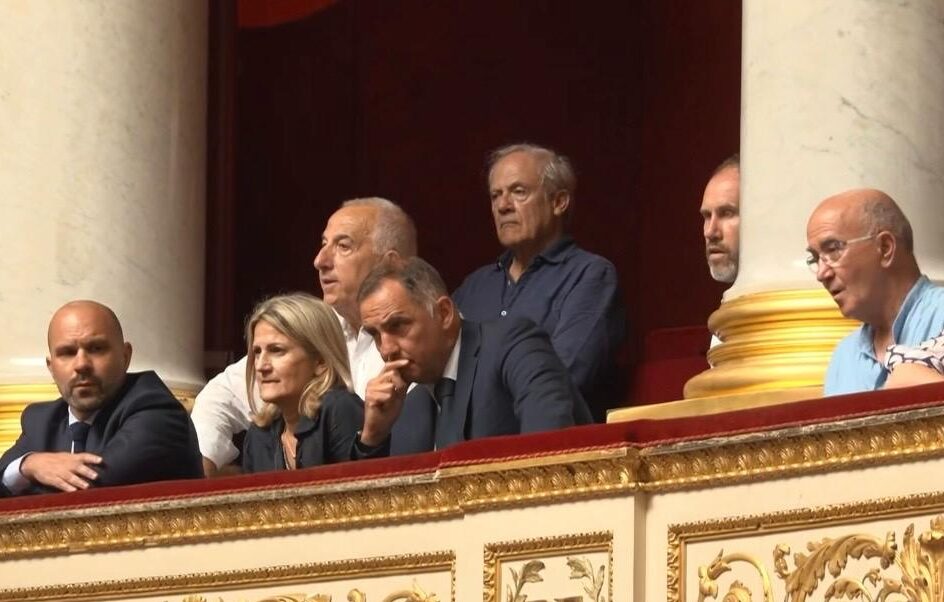
A Step Forward for Europe’s Peoples and Regions
The recent vote in the French National Assembly on Corsican autonomy should be seen less as a breakthrough than as a belated recognition of a reality that has long been acknowledged elsewhere in Europe. In reality, it represents a delayed recognition of a situation long addressed elsewhere in Europe. Corsica remains one of the last islands in the European Union, and in the Mediterranean, without a meaningful autonomous status, despite facing structural challenges common to island territories and possessing a distinct cultural and linguistic identity.
Corsica’s demand is neither new nor exceptional. It reflects a broader European pattern in which island regions have been granted self-governing powers to better respond to their geographic, economic, and cultural specificities. Across Europe, the European Free Alliance (EFA) has consistently supported such processes, defending the right of peoples and regions to obtain the institutional tools they need to govern themselves. In the Corsican case as in others, EFA has underlined the importance of interinstitutional dialogue as the only durable way to build political solutions that respect democratic aspirations and territorial realities.
The proposed reform introduces a limited form of self-government, enabling Corsican institutions to adapt and develop policies in key areas of local importance. Yet, the scope of this autonomy remains constrained, raising legitimate questions about how far decision-making power is truly being transferred.
This development should also be understood as the result of sustained institutional dialogue. The only viable path to overcoming long-standing tensions lies in structured engagement between political institutions at all levels. In Corsica, this process has been driven by democratic actors and civil society, notably under the leadership of Gilles Simeoni, whose efforts have helped secure this initial step forward within the French state.
Across Europe, nations still struggle for the power to decide
For EFA, the Corsican case illustrates a broader European issue. Across the continent, nations without states continue to face structural constraints that prevent them from fully exercising democratic self-government. While each situation is unique, the principle is the same: decisions should be taken as closely as possible to the people they affect.
The only viable path to overcoming long-standing tensions lies in structured engagement between political institutions at all levels. In Corsica, this process has been driven by democratic actors and civil society, notably under the leadership of Gilles Simeoni, whose efforts have helped secure this initial step forward within the French state. At the same time, resistance within French political institutions reveals the limits of centralised thinking. Concerns about precedent, control, or national unity often overshadow a more essential point: democracy is strengthened, not weakened, when it adapts to the realities of its peoples.
Whether this reform succeeds or stalls in the next stages of the constitutional process, one thing is clear: the question it raises will not disappear. Corsica is part of a wider movement across Europe calling for a new balance between states and the nations within them.
If “Liberté, Égalité, Fraternité” is to remain more than a slogan, it must apply equally to all peoples, including those who seek to govern themselves. The French Revolution served as an example for the rest of the world; it is time to spread its ideals of democracy and equality within its own state.
Photo © France 3 Corse Via Stella