The judgment confirms the law’s compatibility with EU law, but EFA stresses that the amnesty remains incomplete until it is fully implemented
The European Free Alliance (EFA) welcomes today’s ruling by the Court of Justice of the European Union (CJEU), confirming that the Amnesty Law for Catalan independence leaders and activists complies with EU law. The judgment marks an important step in defending democratic values and sends a clear message that political conflicts must be resolved through dialogue and democratic means, not through the courts.
EFA President Lorena López de Lacalle welcomed the ruling, stating: “The EU refuses to judicialize politics. This case is about the democratic rights of all peoples to freely decide on their future. Political conflicts require political solutions. The twisted use of justice against the right to self-determination has no place in the European Union. The judicialization of politics is not the way.”
EFA Secretary General Oriol Cases stressed that the ruling must now be followed by action. “European justice has once again placed politics where it should never have ceased to belong,” he said. However, he warned that the amnesty remains an incomplete victory as long as it is not fully implemented. “Today, there are still people who have not regained their political rights. After today’s ruling, the debate is no longer just about the amnesty. The debate is about the democratic quality of the Spanish state.”
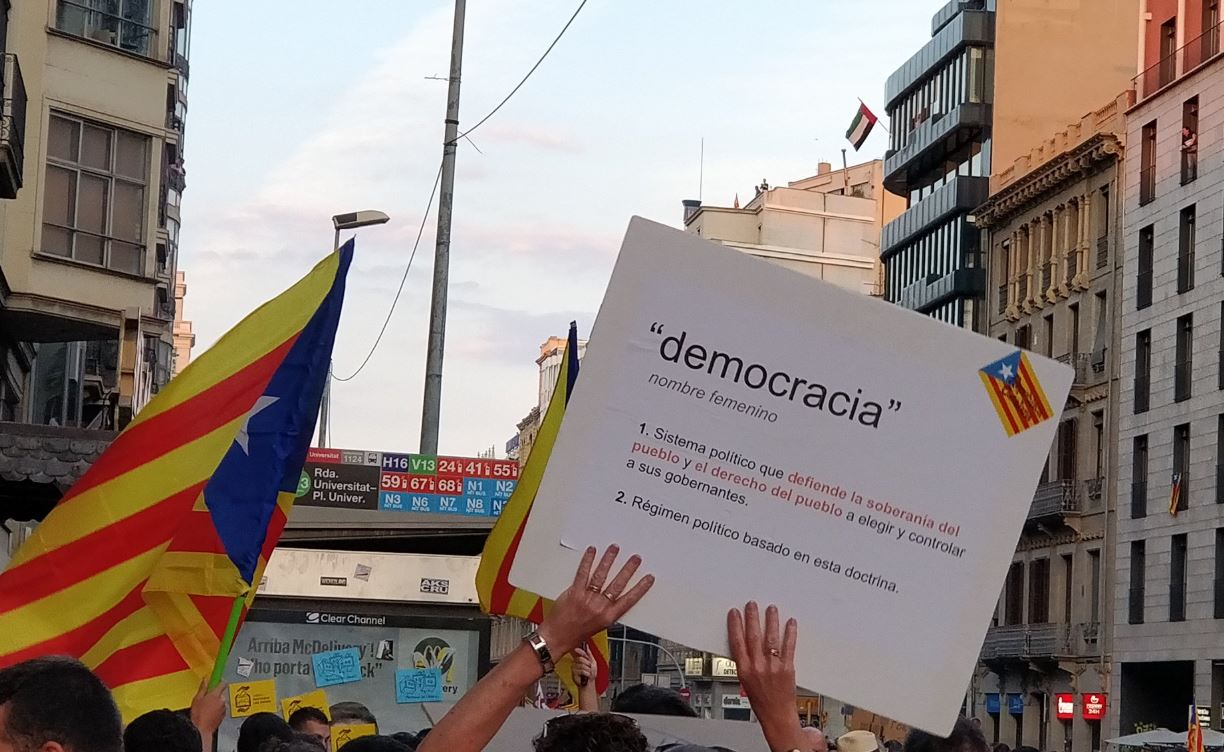
Democracy is not a crime
On a day like today, EFA also wishes to express its solidarity to everyone who has endured political repression for defending democracy in Catalonia. Casting a vote and defending democratic principles must never be treated as criminal acts. Self-determination is a fundamental democratic right, and the people of Catalonia simply tried to exercise that right through a peaceful referendum.
While we welcome today’s ruling and Europe’s commitment to upholding the rights and freedoms of its citizens, the work is far from over. The Spanish state must now fully implement the Amnesty Law and address the democratic shortcomings that allowed a political conflict to be turned into a judicial one. Today’s judgment is not only about the amnesty, it is also about the quality of democracy in Spain and the responsibility to ensure that fundamental rights are fully respected, political disagreements are resolved through dialogue, and no one is prosecuted for defending democracy.